The Dawn of the Disposable Software Era — A Fundamental Transformation of Market Structure and Japanese Companies

Hello — this is the consulting division of Qualiteg Inc.
The rapid evolution of generative AI is fundamentally reshaping how software is built. In 2024, large language models such as Claude, GPT-4, and Gemini dramatically improved their code generation capabilities, and development tools like GitHub Copilot, Cursor, and Windsurf came into wide use in real-world engineering. Beyond that, AI agents with more advanced autonomous coding capabilities — Devin, OpenAI Canvas, Anthropic's Claude coding tools — have also arrived.
Against this backdrop of technological change, our division conducted a detailed analysis of the coming structural shifts in the software industry. In this series, we examine one change that deserves particular attention: a dramatic leap in development productivity in which enterprise SaaS platforms and core business systems that once required on the order of 1,000 person-months can now be implemented by a team of just two or three people in days to weeks, through effective use of AI agents.
This is not mere efficiency improvement. It is the beginning of a paradigm shift that will redefine the software industry's business models, competitive landscape, and talent requirements alike.
A video summary of this report is available below
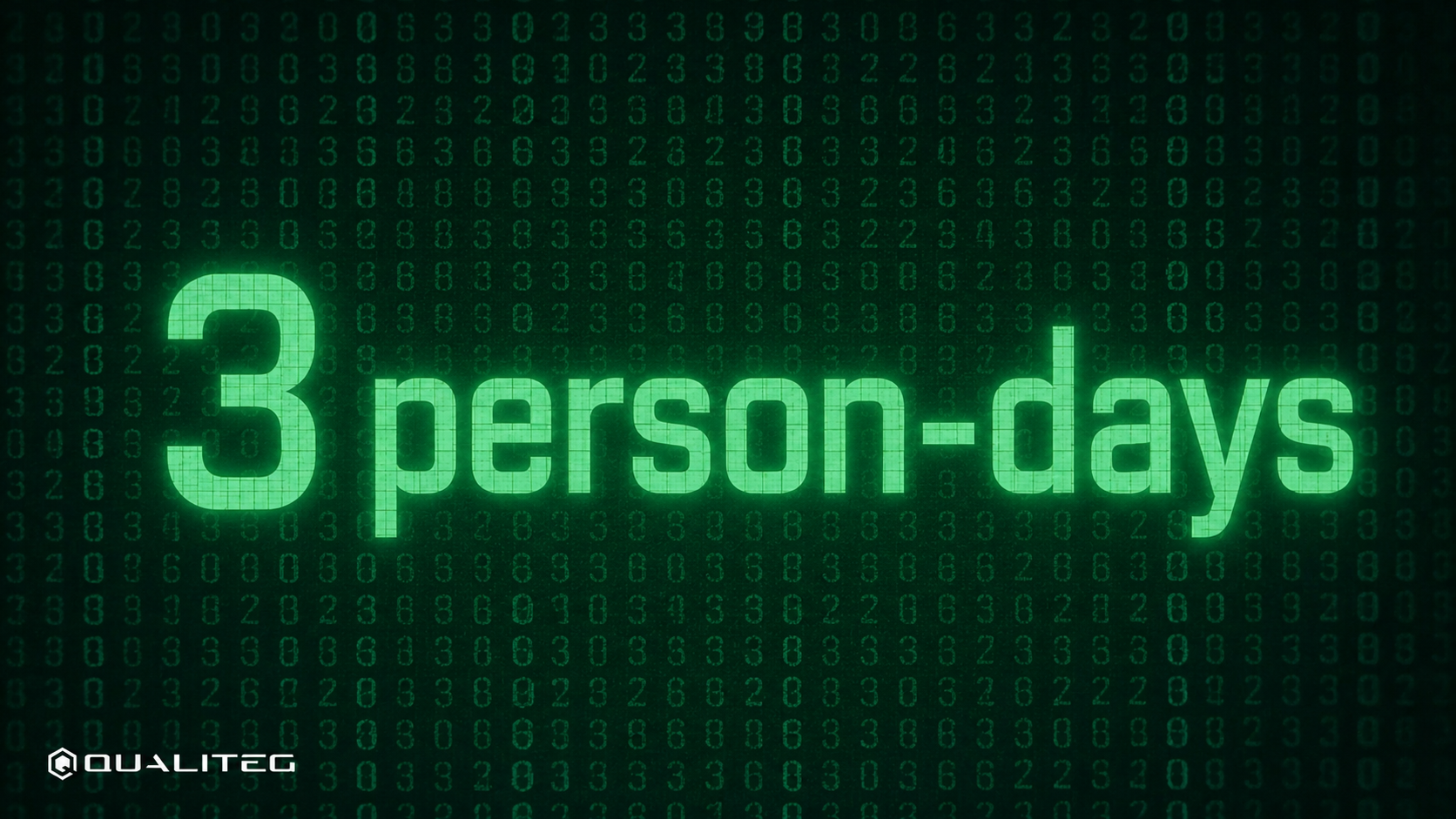
A World Where 1,000 Person-Months Become 3 Person-Days
A world where, by making full use of AI agents, 1,000 person-months of work gets done in three days.
This is not mere efficiency improvement. It is the beginning of a fundamental structural transformation of the software industry.
If you want a customer management system, you simply describe your requirements in natural language, and AI completes it in a matter of hours. Inventory management tools, attendance tracking apps, marketing analytics dashboards — all generated instantly as "made-to-order off-the-shelf products." A "democratization of development," in which anyone can become a software creator without engineering expertise, is becoming reality.
However, the essence of this change lies beyond efficiency and democratization — those are merely surface-level phenomena.
What do we mean by that?
The Evolution of Core Systems: From Unchangeable to Instantly Generated
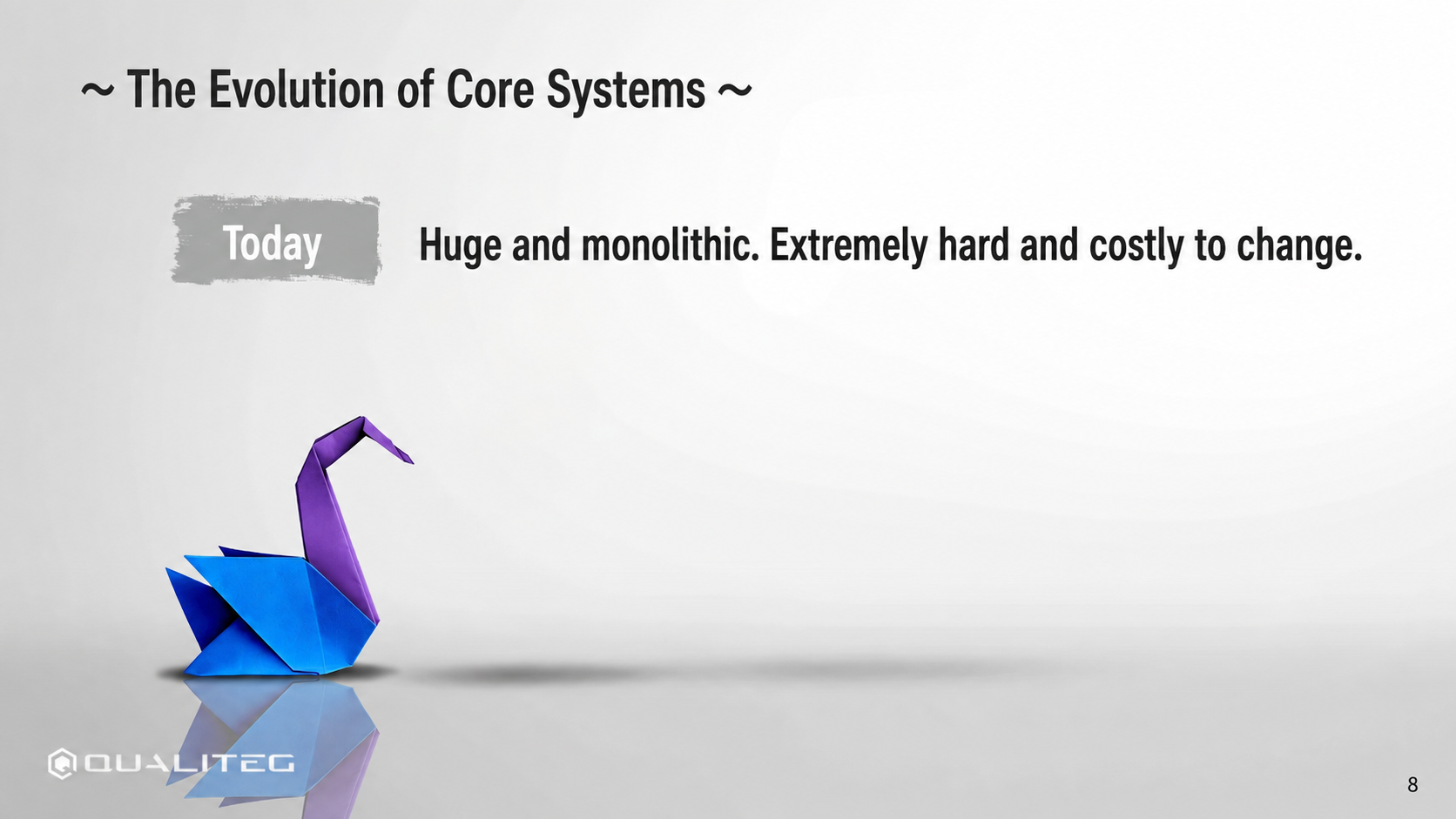
Today: Giant Systems That Resist Change
Today, the core systems of many companies are in a state where change is extraordinarily difficult.
ERP systems built twenty years ago, legacy mainframes, massive integrated databases. Changing them takes enormous cost and time, a careless touch risks breaking everything — and so they sit in a state of "too frightening to touch."
One or two major updates per year is the best most organizations can manage — nowhere near the pace of business change.
Why is change so difficult? Because these systems required massive investment: hundreds of millions of yen to build and tens of millions of yen per year to maintain. A system that cost that much cannot simply be rebuilt.
As a result, companies designed their operations around their systems, and innovation could only happen "within the constraints of the system."
The Transition: Decomposition and Recomposition Become Possible
But the dramatic drop in development costs brought by AI is changing this situation at its root.
If a 100-million-yen system can be built for one million yen, rebuilding it every month still pays for itself. This simple economic principle transforms what a core system can be.
Monolithic giant systems get decomposed into hundreds of small services: an accounting service, an inventory service, a customer management service. They run independently, combine as needed, and are swapped out when no longer needed.
Concepts like this have been the dream of those of us in software and systems for a quarter century — no, even longer.
Twenty years ago, those of us in enterprise IT briefly glimpsed a dream called SOA. "You can decompose functionality into reusable units called services!" was proclaimed loudly (by Gartner, as you may recall), and everyone rushed toward SOA — but in practice, all that materialized was the modest adoption of data-integration platforms known as ESBs.
Ten years ago, at the height of the cloud boom, "microservices" became the trend (and still are).
What is beginning now is not this kind of servicification by human hands, but a drastic decomposition carried out by AI agents — something qualitatively different from every "servicification" effort that came before.
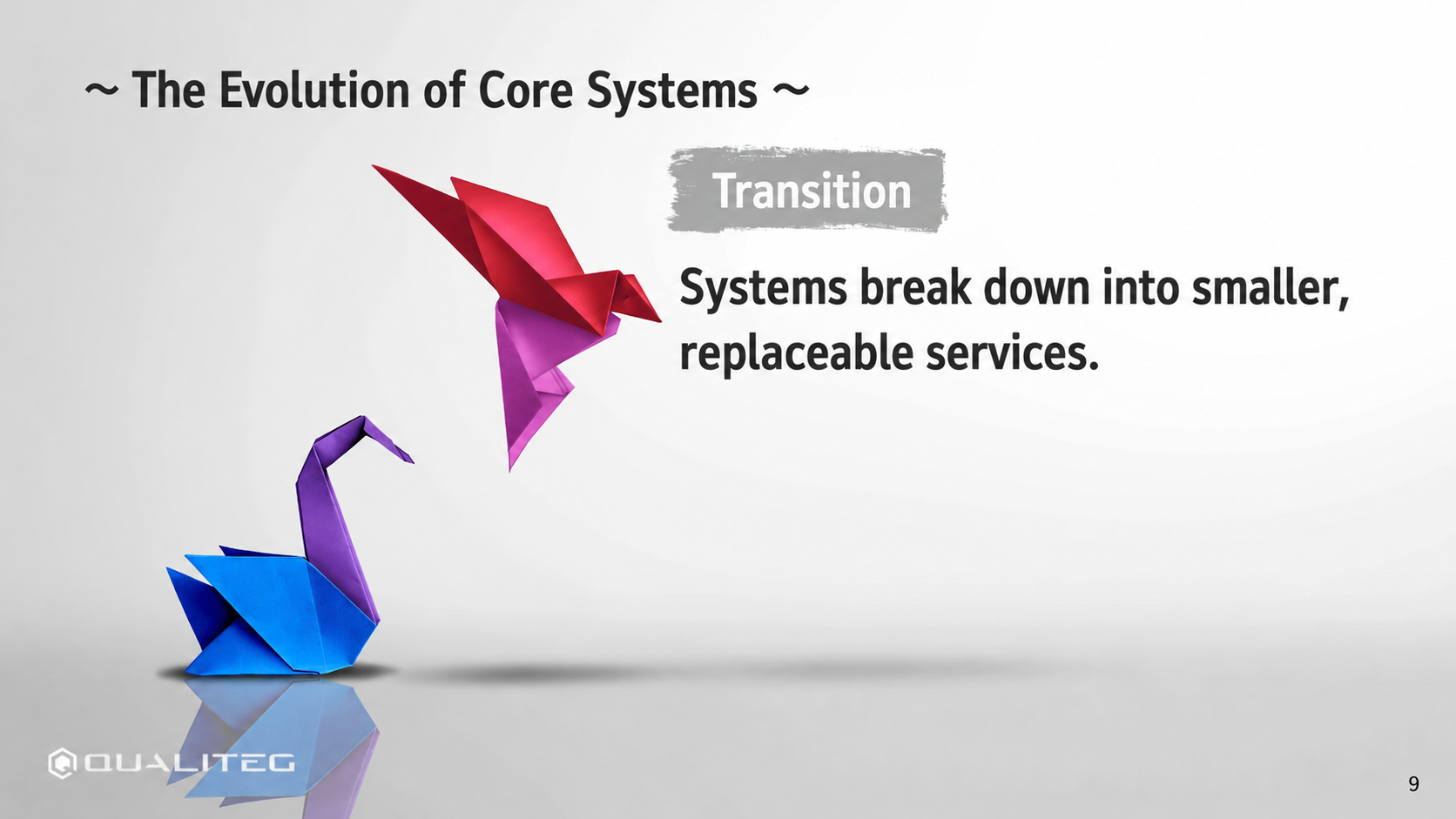
In fact, this shift toward "servicification" driven by LLMs and AI agents has already begun. In many companies, transformation is underway at the periphery of the core system. Functions that used to be part of the core system — report generation, data analysis, external integrations — are being carved out as independent services that can be swapped in and out as needed.
The Future: Instant Creation and Disappearance
Going further, in a future where development costs approach zero, the core system becomes something
"generated instantaneously, whenever it is needed."
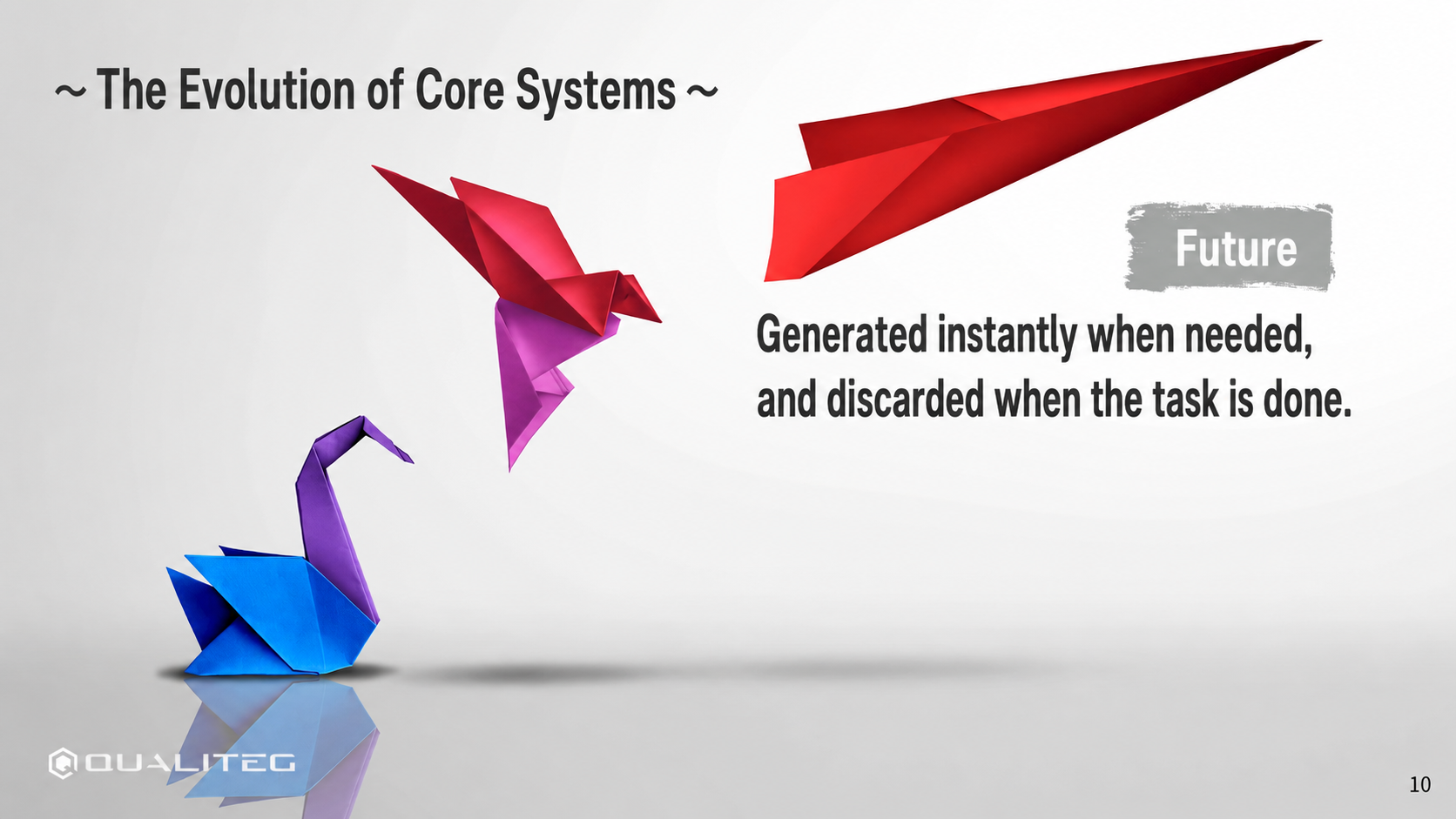
When the CEO decides "this quarter we focus on Southeast Asian expansion," a swarm of AI agents responds instantly. A multi-currency agent, a local-regulations agent, and a logistics-optimization agent link up to form a temporary "core system." When the quarter ends, they disperse again, awaiting a new configuration for the next strategy.
A core system born every day and gone every day. Only the data persists; functionality is generated and destroyed in fleeting cycles.
Disposable Software: A New Paradigm
Software Becomes a Consumable
Through this transformation, software shifts from being an "asset" to a "consumable" — and ultimately to a "momentary phenomenon."
"A promotional campaign management tool used for just three months." "A participant-coordination system for this week's meeting only." "A sales analytics dashboard for this quarter alone." Short-lived, purpose-built software created exactly when needed, in exactly the amount needed — and discarded without hesitation once it has served its purpose.
Consider the case of a major retailer. An inventory optimization system for the Christmas shopping season that would traditionally have taken six months to develop is built in three days with AI. When the season ends, it is discarded; the next year, a new one is built from scratch. Factoring in maintenance costs, this is the economically rational choice.
The Disappearance of Technical Debt
I do not know exactly when the term entered the engineering vocabulary, but "technical debt" has always been a persistent challenge.
Old code, tangled dependencies, legacy systems nobody wants to touch. But in a world of disposable software, the concept itself disappears.
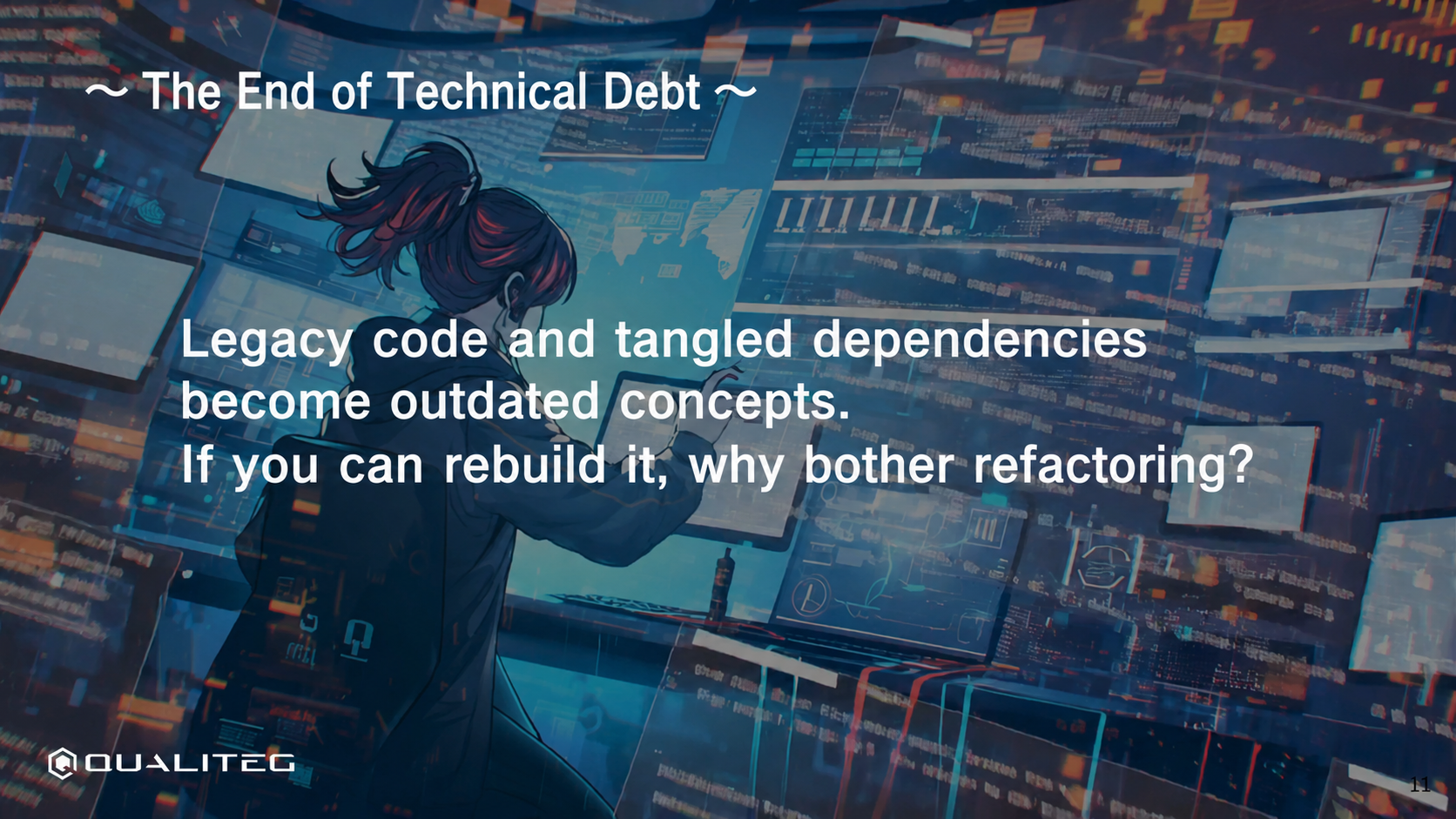
Throw it away before the debt accumulates. Rebuild instead of refactoring. Instead of writing documentation, simply restate the requirements to the AI next time.
There is no longer any need to maintain code quality over the long term. Everything will be discarded in three months anyway — all that matters is delivering something that works right now, right now.
A Stratified Market: The Emergence of Three Layers
Through this transformation, the SaaS market will likely separate into three distinct layers.
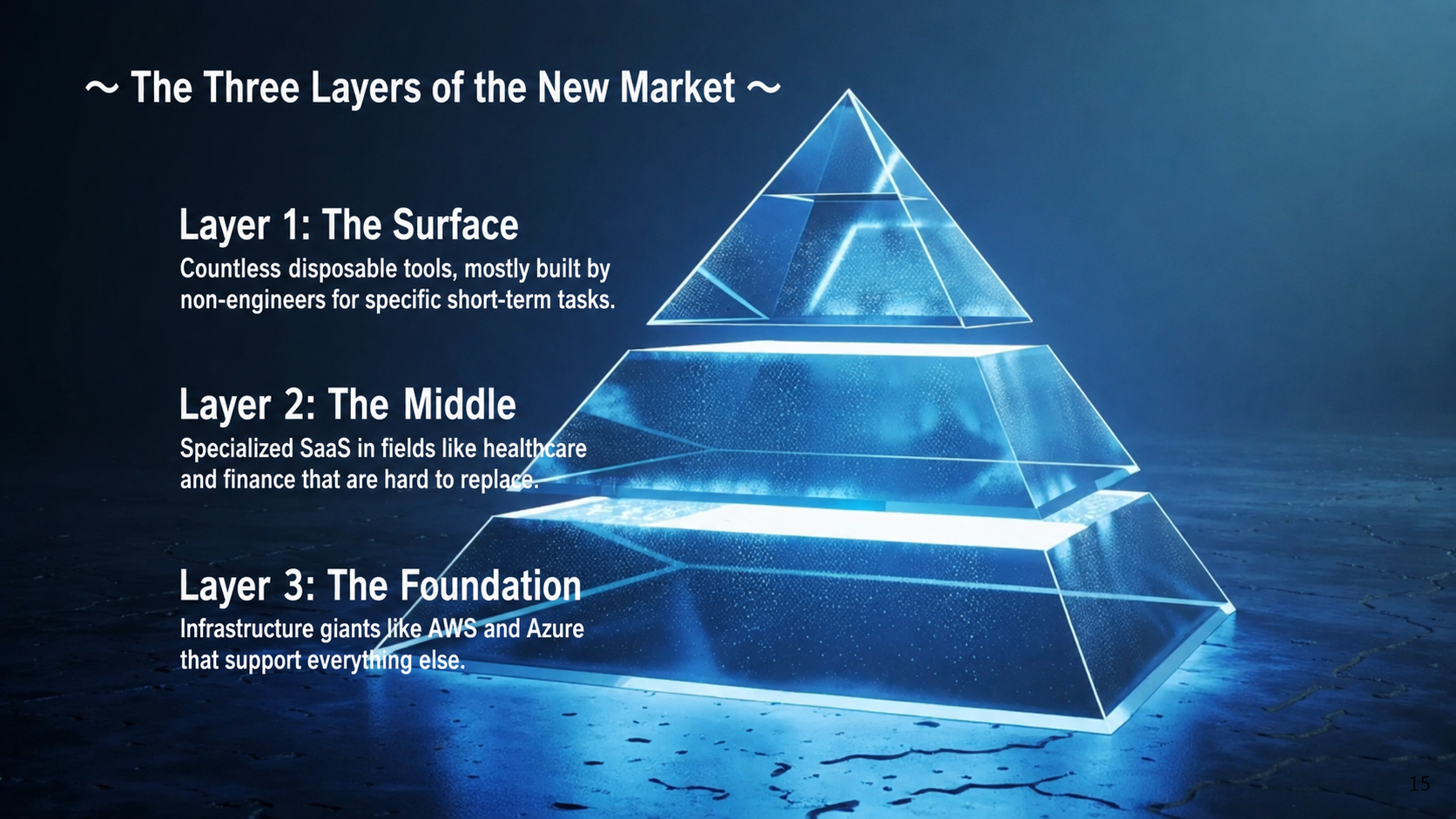
Layer 1: The Surface — Countless Disposable Tools
At the outermost layer live countless disposable tools that are born and vanish daily. Their lifespan is three to six months — sometimes mere hours. They specialize in a specific task and provide only the bare minimum of functionality.
These tools do not even have names. It is a world where pure functionality is the only thing that matters.
What is fascinating is that many of the people building these tools are business users with no programming experience. A sales rep builds their own customer follow-up tool; an HR staffer builds an interview scheduling system. This is truly the era of the "citizen developer."
For someone like me, who once proudly called himself a full-stack engineer, it is a bittersweet prospect — but it is a reality that is certain to arrive.
Layer 2: The Middle — Deeply Specialized SaaS
The middle layer is home to SaaS that is unsuited to disposability — software deeply rooted in specific domains.
Medical device control software, financial trading systems, industrial robot controllers. Because of regulatory requirements, safety, and specialized expertise, these cannot easily be replaced.
But even this SaaS is not untouched. Peripheral functions — reporting, data visualization, user management — are being replaced by disposable modules (modules that can be built and rebuilt on demand), leaving only the core: a "doughnut effect" is underway.
Layer 3: The Foundation — Infrastructure SaaS
At the deepest layer sits the foundation that supports disposable software itself.
AI model APIs, container runtimes, data storage, authentication infrastructure. As the "immovable infrastructure" on which disposable tools depend, these will only grow in importance.
Microsoft's Azure, Amazon's AWS, Google's Cloud Platform — these will cement their positions as the bedrock supporting countless applications.
A Fundamental Shift in Value: What Endures and What Vanishes
Finding the Finite Within the Infinite
The essence of the disposable software era is
the simultaneous devaluation of functionality and appreciation of meaning.
Any functionality, however complex, can be generated instantly by AI agents, at a cost approaching zero. At that point,
the assets that remain with a company are not software, but the "reasons" to use it, the "relationships" around it, and "peace of mind".
Five Axes of Value for the New Era
1. Data as the New Sanctuary
In an era when everything becomes disposable, data alone remains a sanctuary. The history of conversations with customers, the record of failures and successes, the trail of decisions made. This "data with context" becomes the compass that gives direction to a limitless supply of AI agents.
2. Relationships as an Invisible Asset
Software can be generated in an instant, but relationships can only be built over time. A CRM system can be created in a moment; ten years of trust with a customer cannot. The value of "what only time can create" approaches infinity in relative terms.
3. "Peace of Mind" as an Invisible Product
Selling not just functionality but "peace of mind" — this becomes the competitive axis of the new era
Tools generated by AI may be highly capable. And yet:
"We don't know who built it."
"We don't know whom to contact when something breaks."
"There's no guarantee it will still exist tomorrow."
No company can entrust its core business operations to tools burdened with these anxieties.
Around-the-clock support in Japanese, rapid response when failures occur, compensation when data is lost — this kind of "peace of mind" cannot be generated by AI. It must be built up over time by humans, and delivered with accountability.
4. The Courage to Take Responsibility
In an era when AI agents can generate functionality without limit, the final human role that remains is taking responsibility.
When a system fails, when data is lost, when a security incident occurs — who takes responsibility? Being able to answer that question clearly becomes the greatest source of value in the disposable era.
5. Aesthetics and Ethics
In an era when functionality can be generated without limit, it is human aesthetics and ethics that draw the line between "can" and "should." The courage not to choose, the discipline not to build — these will be tested, both as corporate posture and as individual attitude. AI will be able to build anything; what may be done and what must not be done falls to the judgment of those who build.
What Makes the Japanese Market Different in the Disposable Era
Japanese Companies Put "Peace of Mind" First
We have indulged in a somewhat romantic vision of the near future — now let's bring the focus back to reality. Here in Japan, there is a distinctive perspective on software and SaaS. Let's reflect on it and consider what it means.
When Japanese companies select SaaS, the product with the most checkmarks on the feature comparison sheet is not necessarily the one that wins.
Consider the reality inside the IT department of a major manufacturer.
"However good the features are, if the person in charge quits, it's over. If the company folds, it's over. If we ask a question and never hear back — we simply can't risk using a service like that. We cannot afford to let our operations stop."
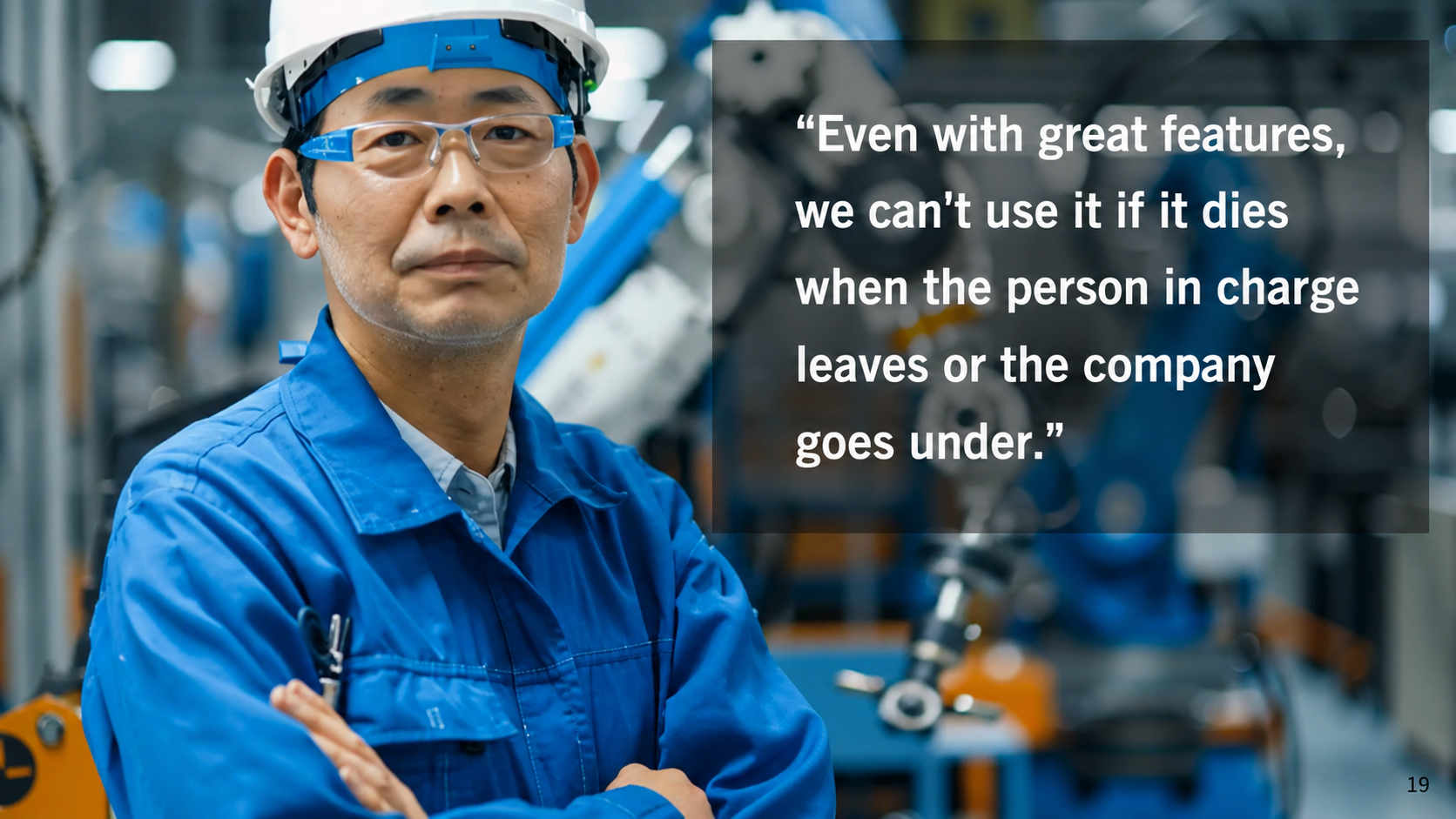
In fact, when you look at the foreign SaaS providers that have succeeded in the Japanese market, an interesting pattern emerges. Salesforce, Microsoft, SAP — all of them established Japanese subsidiaries, provide phone support in Japanese, and issue invoices in line with Japanese business practices. For large enterprise customers, they even build dedicated internal organizations to provide high-touch support. Even amid many functionally superior competitors, it is precisely this "Japan readiness" that becomes the decisive reason they are chosen. Many services that thrive overseas but never take off in Japan owe that failure to this lack of "support" — something that we, as an AI company providing SaaS ourselves, must keep firmly in mind.
The "Locus of Responsibility" Problem in the Disposable Era
Moreover, in an era when anyone can build software with AI, Japanese companies' demand for a clear locus of responsibility may well grow stronger.
"This tool is handy — let's just use it" is a judgment call that almost never happens inside a Japanese company. A contact point for failures, accountability for data leaks, someone to consult about specification changes — unless these are clearly established, even the finest tool will not be adopted.
When disposable tools are built by individuals or small teams, do they have the structure to bear that responsibility? The reality is that unless "who takes responsibility when something goes wrong" is clearly answered, widespread adoption in the Japanese market will remain difficult.
The Paradoxical Value Created by Support
Perhaps you have already noticed.
Interestingly, precisely because development is being automated, the value of human support rises in relative terms.
"Move this button three pixels to the right." "Change the report's print order to department-code order." "Handle our special fiscal year-end processing." The requests Japanese companies make of their vendors are at times astonishingly fine-grained. And what matters most is the expectation that a "person" will respond to them.
You cannot expect a tool that AI whipped up in moments to handle — on its own — this level of fine-grained accommodation.
As a result, a hybrid model — "AI builds the functionality; humans provide the support (and the fine-tuning)" — may well become the mainstream in the Japanese market.
The Potential of a Japanese-Style Hybrid Model
The realistic choice may be to combine the "efficiency" of disposability with Japanese-style "peace of mind."
Maintain core functionality as a stable foundation
- Protect mission-critical data without exception
- Handle regulated processing with due care
- Honor commitments to customers permanently
- Maintain 24/7/365 support
Aggressively make peripheral functionality disposable
- Start the disposable shift with reporting features
- Generate analytics tools on demand
- Rebuild UIs frequently
- Use it boldly in experimental projects
This "two-front strategy of defense and offense" is likely to be the realistic choice for Japanese companies.
Relationships and Peace of Mind: Japan's Strengths
In fact, this culture of prioritizing peace of mind may be a great opportunity for Japanese companies.
High-touch support that global markets consider excessive, fine-grained customization, long-term relationship building — precisely in an era when functionality can be generated without limit, these become true differentiators.
"Why buy from us?" The companies that can answer that question not with features but with "peace of mind" and "trust" — those are the Japanese companies that will thrive in the disposable era.
A New Relationship Between Humans and AI Agents
Humans as Orchestrators
The more disposable software proliferates, the more the human role shifts from "building" to "orchestrating."
A world where 100 AI agents are generated in a day and 50 disappear. Humans can no longer manage individual tools. Instead, the primary human job becomes setting policy for the agent swarm: which domains to build tools for, and by what criteria to retire them.
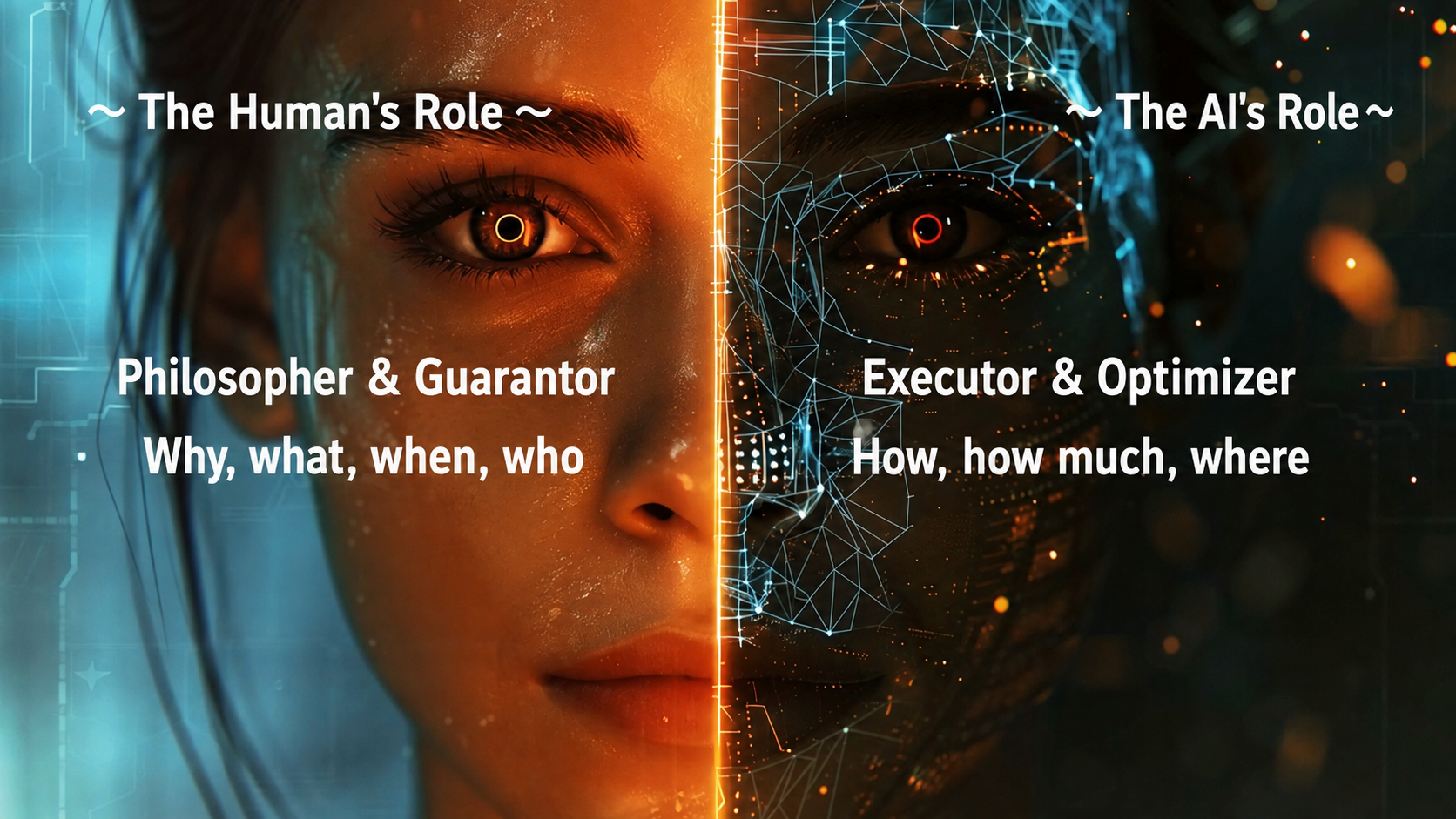
The Complete Separation of Judgment and Execution
The human domain:
- Why: setting the purpose
- What: defining the goal
- When: judging the timing
- Who: accepting responsibility

The AI domain:
- How: generating the method
- How much: optimizing resources
- Where: choosing the execution environment
As this separation deepens, humans come to play two roles: the "philosopher" and the "guarantor."
Disruptive Impact on Industry Structure
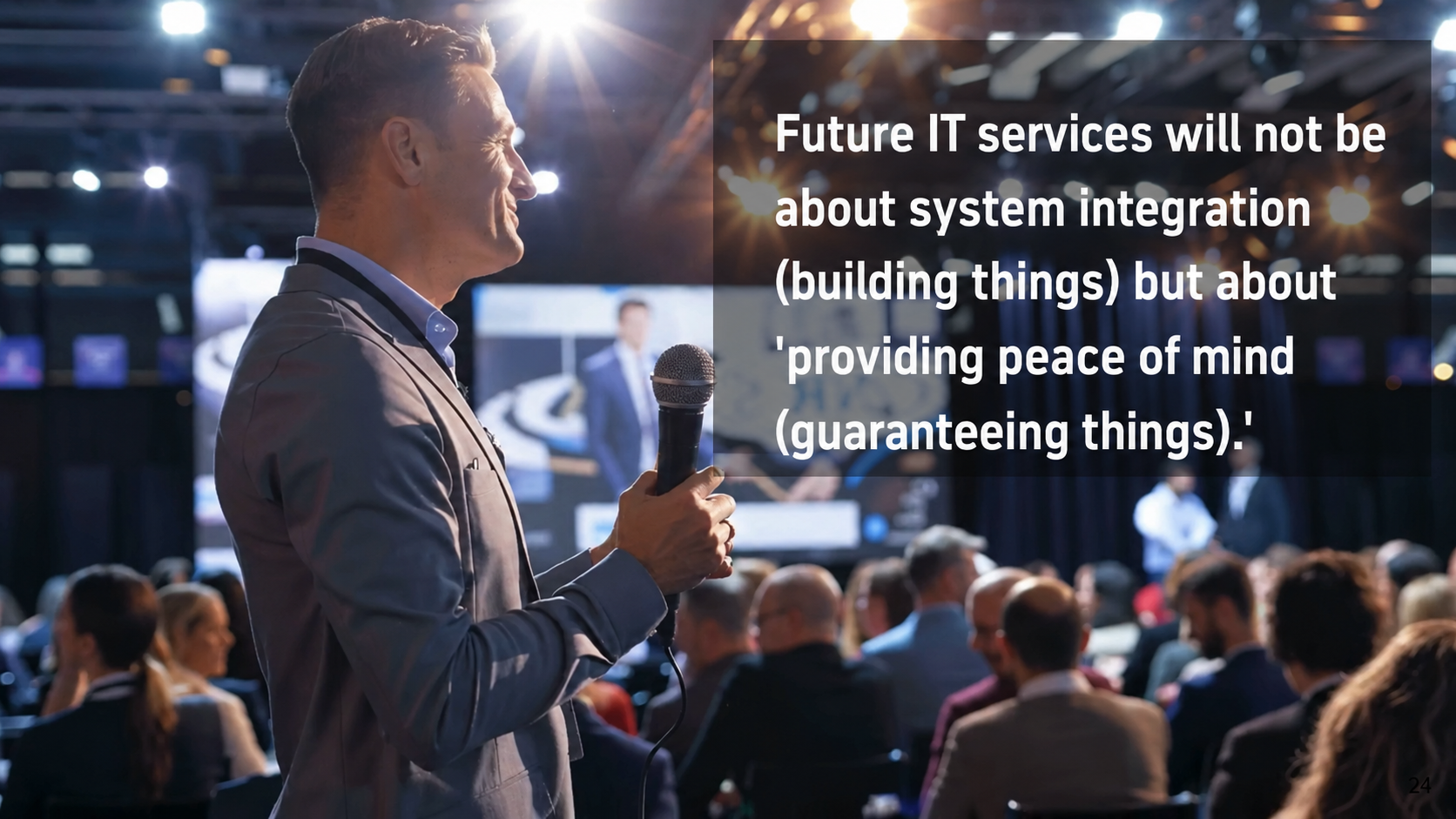
From the SI Business to the "Peace-of-Mind Business"
The system integrators (SIers) that have long underpinned Japan's IT industry are facing fundamental transformation.
The traditional SI business rested on large initial development projects and long-term maintenance contracts. In a world of disposable software, that structure no longer holds.
What emerges in its place is a new business model we might call the "peace-of-mind business."
Assurance services
- Quality assurance for AI-generated tools
- 24/7/365 support in Japanese
- Assumption of responsibility when trouble occurs
- Compensation for data loss
Relationship management services
- Building long-term customer relationships
- Coordinating among stakeholders
- Cultivating and maintaining trust
These are services AI cannot provide — services only humans can deliver.
A New Profession: The Safety-Net Manager
The disposable era may give rise to entirely new professions
The role of the safety-net manager
- Risk assessment of the disposable tool portfolio
- Building response structures for failures
- Accountability to stakeholders
- Making "peace of mind" visible and deliverable
This is a role that demands trust-building over technical prowess, and communication skills over coding ability.
Conclusion: A New Equilibrium Between Efficiency and Peace of Mind
The arrival of the disposable software era is not mere technological progress. It is a paradigm shift that overturns the fundamental assumptions of the software industry.
But not everything becomes disposable. Rather, this change throws "enduring value" into sharper relief.
Data, relationships, responsibility, narrative, aesthetics, and "peace of mind" — these human elements may be the values that remain at the end.
In the Japanese market especially, the invisible product called "peace of mind" may become the most important competitive axis. Functionality can be created in an instant, but peace of mind can only be built over time. AI can generate tools without limit, but only humans can take responsibility. This paradox creates new business opportunities.
What matters is not to treat the "efficiency" of disposability and Japanese-style "peace of mind" as opposing concepts, but to find the path where both coexist. Let AI generate the functionality; let humans provide the peace of mind. This division of roles is likely to be the practical answer for Japanese-style DX.
The Industrial Transformation Brought by the Democratization of AI-Driven Software Development
In this article we deliberately used the somewhat provocative term "disposable," but this is by no means an endorsement of neglecting quality. In mission-critical domains such as finance and healthcare, the demands of rigorous quality management and reliability will not be relaxed.
Yet in an era when the rapid evolution of AI agents makes it possible to generate and modify software instantaneously, we face fundamental questions.
Development methodologies, quality assurance frameworks, and value creation models established over decades — all of them are being forced into redefinition.
What matters in this wave of technological change is answering the following strategic questions
- As automation advances, what value can only humans provide?
- Of our existing development processes, which core competencies are essential to retain?
- How do we build competitive advantage under the new technological paradigm?
The transformation has already begun. Strategic positioning during this transition will determine corporate competitiveness in the years ahead.
As instant software generation and the rapid spread of AI agents dramatically reshape the business environment, our consulting division provides comprehensive support for next-generation management strategy, technology strategy, and new business development.
Specialists with more than 25 years of front-line experience in the software industry, together with senior consultants who have shaped management strategy at global enterprises, deliver practical solutions for your company's sustained growth.
For details, please contact us below. We will tailor a proposal to your specific business challenges.
https://qualiteg.com/contact?inquiry=consulting
Coming Next: The Counterattack of the Small Elite Team
In this era of ultimate disposability, what strategies should a small team of two or three pursue?
Interestingly, Japan's peace-of-mind-oriented market presents a high barrier to entry for small teams. But for those who break through that barrier, a formidable competitive advantage awaits.
In the next installment, we take a detailed look at strategies for small elite teams to succeed in the Japanese market — and strategies with a global horizon. "Peace of mind with a human face," "trust built through ultra-fast response," "turning the community into an ally" — ways of delivering "peace of mind" that only a small team can.
And in the installment after that, we plan to discuss how large enterprises should compete in such an era.