[AI-Driven New Business Creation] How Qualiteg Conducts User Interviews for Hypothesis Exploration
Hypothesis-exploration interviews are hard and demand technique. Unlike fact-checking validation interviews, they probe what participants think and struggle with now. Go one-on-one with cameras on, build rapport with icebreaking, follow your guide flexibly, and dig into motives by repeating "Why?"

![[AI-Driven New Business Creation] How Qualiteg Conducts User Interviews for Hypothesis Exploration](https://images.unsplash.com/photo-1565688534245-05d6b5be184a?crop=entropy&cs=tinysrgb&fit=max&fm=jpg&ixid=M3wxMTc3M3wwfDF8c2VhcmNofDV8fGludGVydmlld3xlbnwwfHx8fDE3MTMwMTY1MjF8MA&ixlib=rb-4.0.3&q=80&w=1200)
Hello, and welcome to the Qualiteg blog. I'm Michele. In my work supporting AI-driven new businesses and marketing, there are questions I hear from clients again and again. Through this blog, I'd like to share my own answers to the challenges that anyone considering an AI-based business is likely to face.
To be honest, hypothesis-exploration interviews require real technique and are quite difficult. There are people, consultants among them, who can run hypothesis-validation interviews, but a validation interview that checks facts, such as which option someone liked or whether they actually use a product, is a completely different thing from an exploration interview that listens for what people are thinking about and struggling with right now.
Here, I'd like to offer a guide to conducting hypothesis-exploration interviews that actually produce useful results.
First, build a relationship with the participant
Interviews are increasingly conducted online these days, and when you hold one, I recommend keeping the camera on and doing it one-on-one. A one-on-one setting is what allows trust to develop with the other person.
Icebreaking at the start of the interview is also extremely important so that participants can relax and speak naturally. The goal at this stage is to soften the formal atmosphere and build rapport. For icebreaking, choose light topics related to the participant's interests or everyday life.

For example, start by asking about hobbies or something enjoyable that happened recently. Rather than only asking questions, share a little about yourself as well, and try to create an atmosphere where the conversation flows back and forth.
At the same time, introduce yourself as the interviewer and briefly explain your background and the purpose of the interview. This creates transparency and helps participants feel at ease.
Even a short icebreaker is an indispensable step for raising the quality of the interview. Using this time well helps the whole conversation go more smoothly and lets you draw out deeper information. My recommendation is at least 10 minutes, and if the full session is 60 to 90 minutes, I think it's fine to spend 15 to 20 minutes on icebreaking.
Genuine innovation is born from "creative friction," where diverse perspectives collide. Innovation-Cross from Qualiteg Inc. is a program that deliberately crosses different knowledge and ideas from inside and outside the company to promote the creation of innovative value. Based on an analysis of your company's current state, we formulate a strategy for effectively connecting different internal departments and external partners, and spark chemical reactions among diverse ideas through idea workshops, hackathon planning, and more.
Including support for applying cutting-edge AI technology, we deliver innovation through the fusion of unconventional ideas that a company could not generate on its own. Our experienced consultants manage this creative friction skillfully and guide you toward new value creation beyond conventional boundaries. Innovation blooms where boundaries are crossed.
How to ask the key questions effectively
During the interview, proceed through the key questions in a structured way, following the interview guide you prepared in advance. At this stage it is important to respond flexibly to participants' answers and to dig deeper with follow-up questions where necessary.
A common trap, and a dangerous one, is to ask questions strictly along your prepared interview guide while unconsciously wanting to elicit the answers you expected, and thereby ending up controlling the content of the interview.

This interview is not about validating hypotheses. It is purely hypothesis exploration, so the hypotheses you prepared in advance do not need to be correct. Never forget that this interview was set up in order to listen to the other person.
So even if the participant's story wanders off topic, there is no need to force it back and steer things along your guide. If the conversation drifts, go with the flow and probe into another item you had planned to ask about later. Listen carefully to what participants say and ask relevant follow-up questions, focusing on drawing out more detailed information and opinions.
This process is useful not only for gathering information but also for understanding the meaning and emotions behind participants' words. The interview guide provides a basic framework, but you should prioritize the natural flow of the dialogue and respond sensitively to what participants say, so please try to run the interview in that spirit.

Dig deeper with follow-up questions
When digging deeper with follow-up questions, the question "Why?" is extremely effective.
When a participant tells you something, use this question repeatedly to uncover the motives and emotions behind it. The first "Why?" often reveals only a surface-level reason, but by repeating it several times, deeper reasons and essential feelings begin to emerge.
There will also be cases where these cannot be put into words, but asking plenty of "Why?" questions will help you when you analyze users' emotions later.
For example, suppose you interview someone about why they use a particular shampoo. At first you get stock answers such as "it makes my hair silky," but as you keep asking "Why?", you hear episodes such as "my hair gets a shine and looks more attractive" or "someone complimented me on how good it smelled," and you come to see that this person's purchase-decision driver is a desire to be seen as an attractive woman, to be admired.

By repeating "Why?" like this, you can get closer to the true underlying cause.
This approach naturally draws out feelings and thoughts that participants themselves are not conscious of, and it is a means of gaining rich insights in interviews. This kind of probing improves data quality and fosters a more detailed understanding. It does take practice, but I highly recommend interviewing with this technique.
Thank you very much for reading this column to the end. At Qualiteg, we provide training and consulting on AI technology and on how to plan new businesses. If this has caught your interest, or if you have specific requests, please feel free to contact us through the inquiry form here.

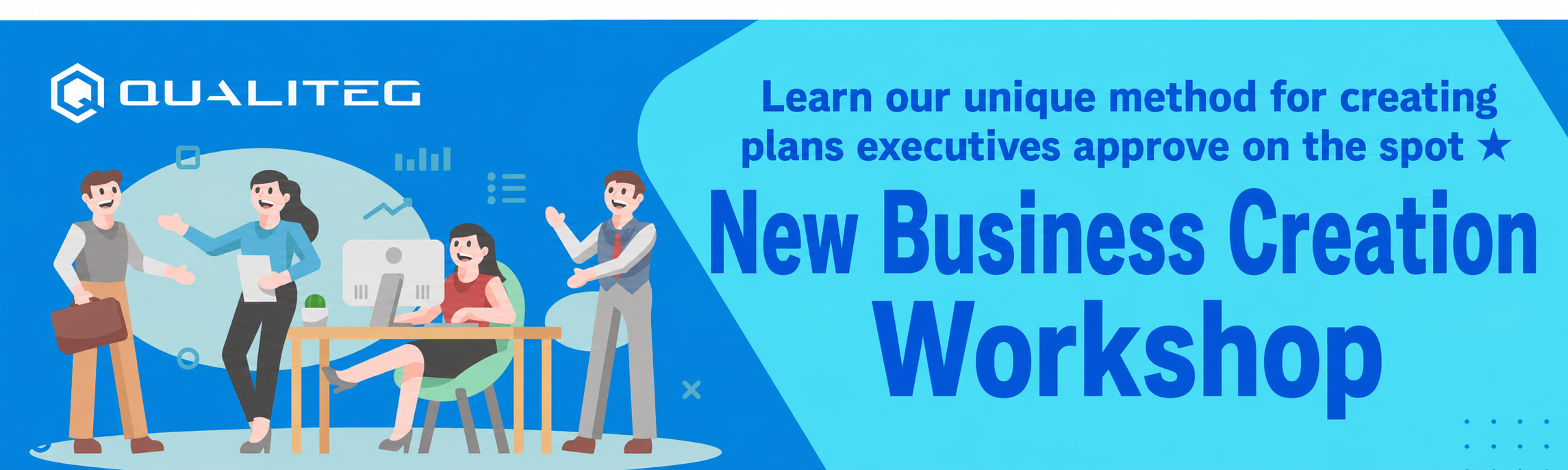
We also run a popular workshop for those who want to master the steps of creating a new business. The training focuses on having each participant think about the business from an executive's point of view, and the content is suitable not only for planning staff but also for their counterparts in engineering, design, and marketing.
We look forward to hearing from you. Please stay tuned for our next column.
navigation