
Tensor Operations Worth Mastering: permute(1,0)


This series is for machine learning engineers just getting started: it helps you build a clear mental picture of the tensor operations you use all the time in PyTorch and NumPy.
Rather than a reference that aims for strict formal rigor, we will learn through the kinds of code you actually see in real-world source.
Today's topic is permute(1,0)
permuteThis operation is commonly used to change the order of a tensor's dimensions.permuteThe method's arguments specify the new ordering.
For a 2-dimensional tensor, permute(1,0) produces the transposed tensor. Let's walk through why, step by step.
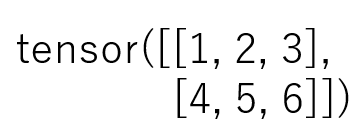
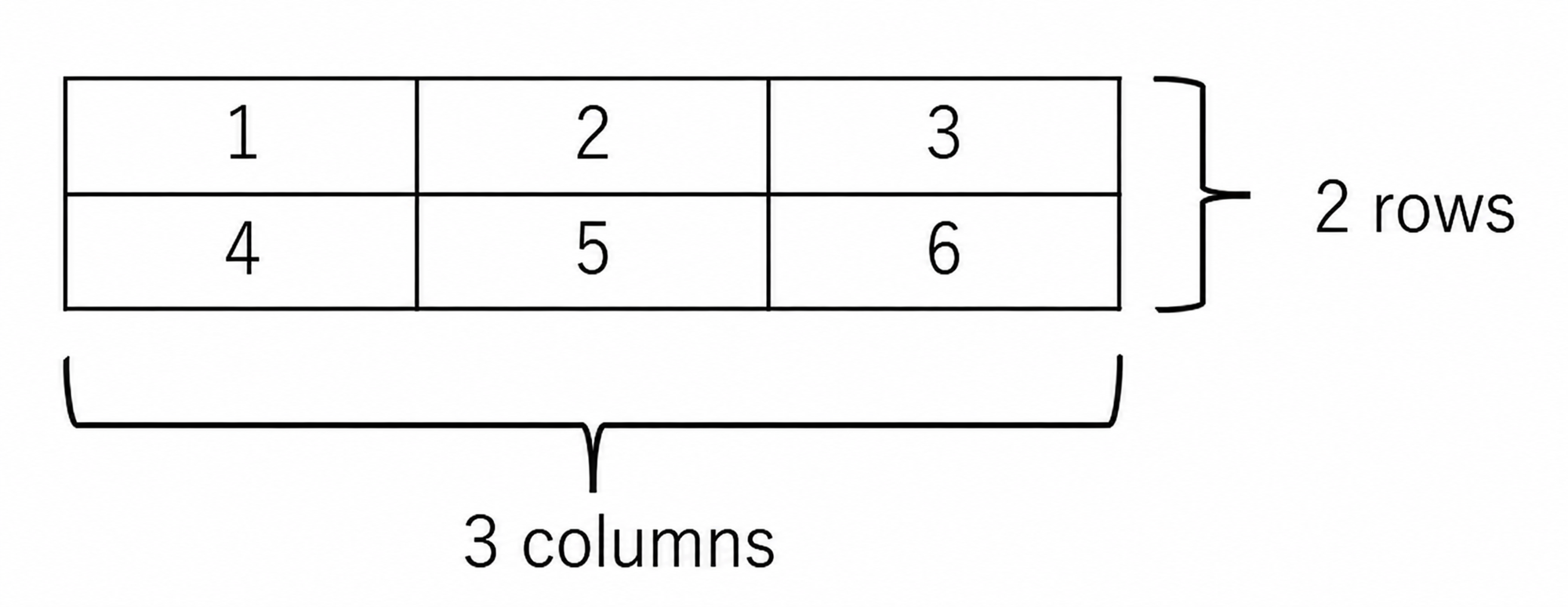
Let's start with a 2×3 tensor like the one below
Since this tensor is 2-dimensional, we can represent it as a table.
In PyTorch, this tensor can be defined as follows.
import torch

x = torch.tensor([[1, 2, 3],
                  [4, 5, 6]])
As noted above, the shape of this tensor is 2 × 3.
In code, we write this as (2,3) or [2,3].
You can get a tensor's shape with .shape, like this
print(f"Shape: {x.shape}")The output looks like this
Shape: torch.Size([2, 3])Now, this [2,3] is the size of each dimension.
What lets you change the positions of these dimensions is permute
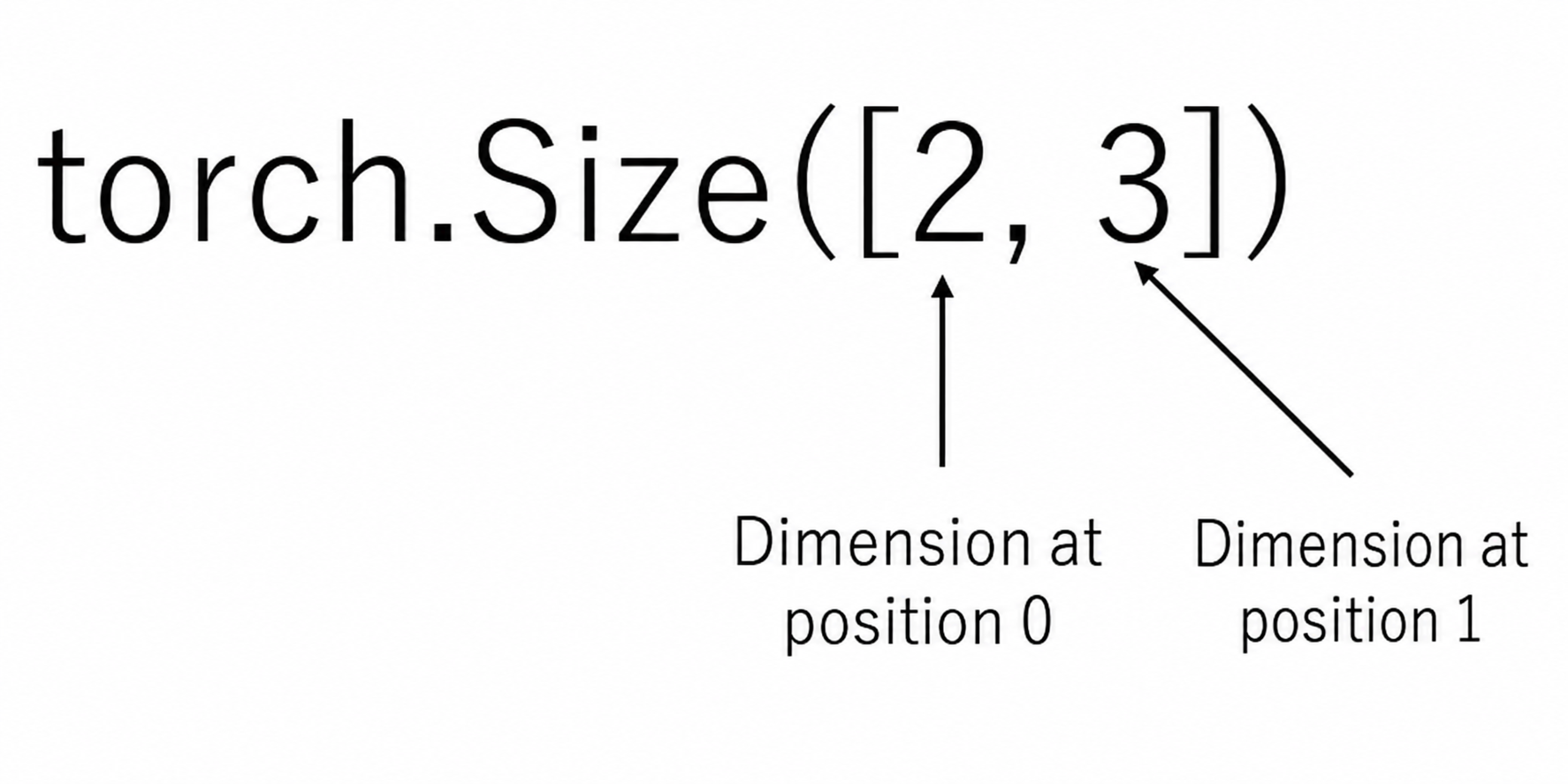
In our current example,
- the dimension at position 0 (the rows) has size 2
- the dimension at position 1 (the columns) has size 3
If we think of each dimension as a "person,"
the grammar of permute is

.
So,
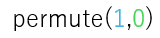
means the following.
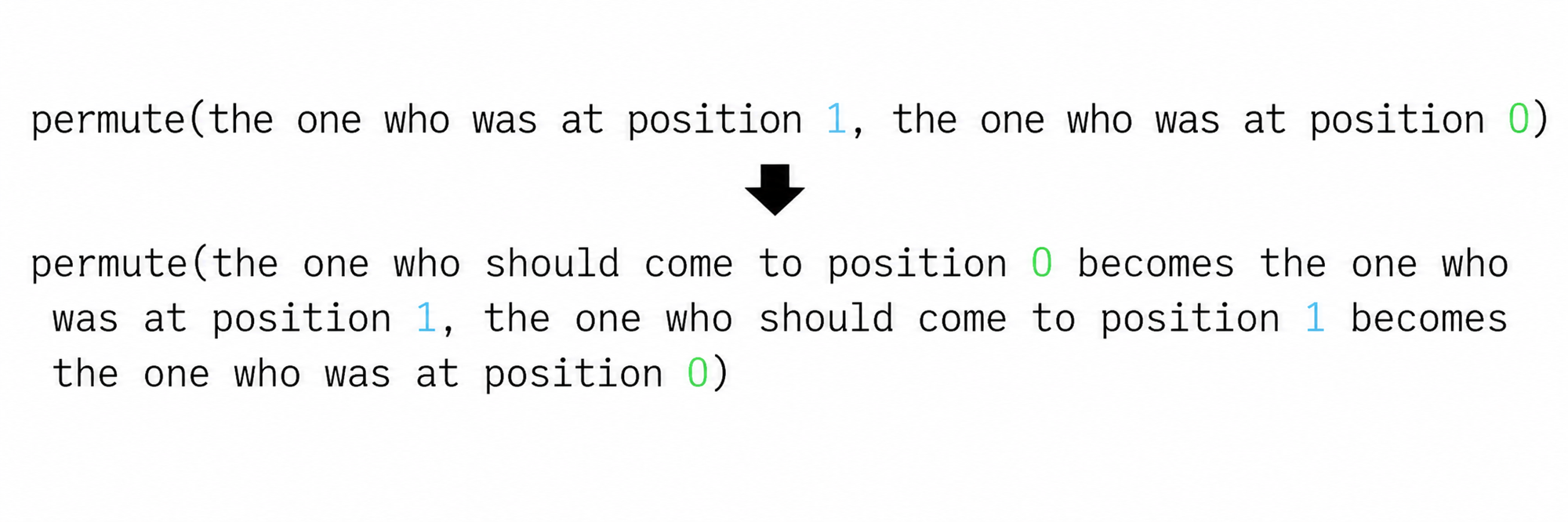
Sample code for permute(1,0)
import torch
import numpy as np

x = torch.tensor([[1, 2, 3],
                  [4, 5, 6]])
print("Original tensor:")
print(x)
print(f"Shape: {x.shape}")

# permute: change the order of dimensions
print("\n1. Permute")
print(f"Before: {x.shape}")
y = x.permute(1, 0)
print(f"After permute(1, 0): {y.shape}")
print(y)
The result is a [3,2] tensor, as shown below.
Original tensor:
tensor([[1, 2, 3],
        [4, 5, 6]])
Shape: torch.Size([2, 3])

Permute
Before: torch.Size([2, 3])
After permute(1, 0): torch.Size([3, 2])
tensor([[1, 4],
        [2, 5],
        [3, 6]])
In other words, it has been transposed.
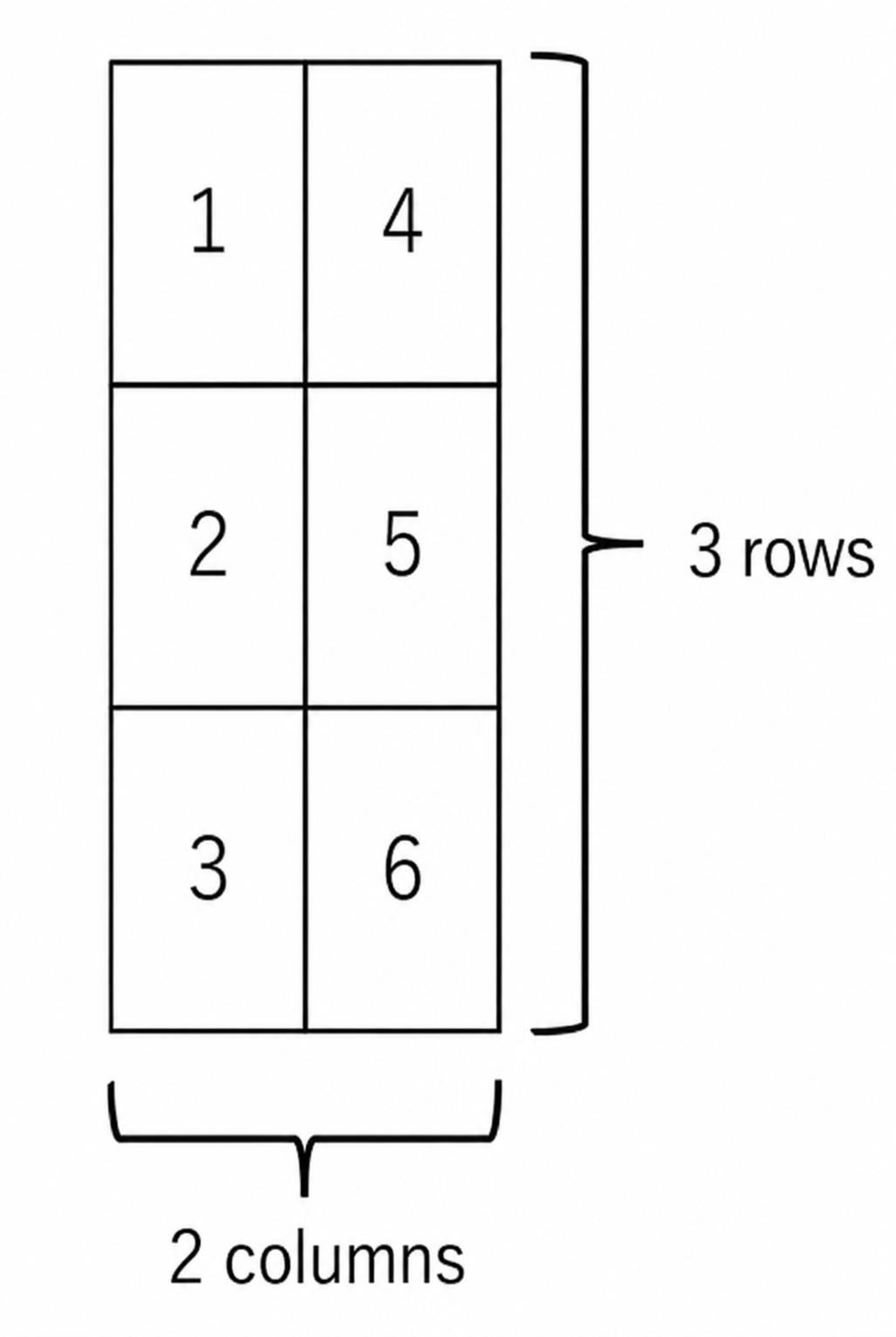
So for a 2-dimensional tensor, permute(1,0) is exactly the "transpose" operation.