What Are "Guardian Agents," the New Sentinels of the AI Agent Era?


Hello! Today we take a closer look at Guardian Agents, a concept Gartner recently announced.
Gartner's Official Definition
In June 2025, Gartner—well known for its Hype Cycle—published its perspective on Guardian Agents.Guardian agents are AI-based technologies designed to support safe and trusted interactions with AI—that is how Gartner defines them.
To put it simply:
Gartner, the firm that once predicted "AI agents are coming," has now made its next prediction: "Guardian Agents are coming." Why Guardian Agents? In this article, we explore that question.
Why AI Now Needs a "Watchdog"
In 2025, we are standing at the threshold of the full-scale AI agent era. As AI evolves from a mere tool into "agents" that make decisions and act autonomously, new challenges are emerging.
How Conventional AI Differs from Agentic AI
One key reason Guardian Agents are becoming necessary is the rapid evolution of generative AI (hereafter simply "AI"). Let's revisit the differences between conventional AI and agentic AI.
In this way, agentic AI does not merely "wait for instructions"—it "acts autonomously, thinking for itself," which makes it dramatically more powerful than conventional AI.
Isn't agentic AI powerful enough to be a little frightening?
➡ That is exactly why "Guardian Agents" are needed
Agentic AI's power comes with correspondingly large risks
- It may cause serious damage through incorrect decisions
- It may act beyond its granted authority
- It may trigger unexpected chain reactions
To manage these risks,
Guardian Agents are needed as the "watchdogs of AI"
In short, it was presumably to address these risks that Gartner proposed the concept of "Guardian Agents."
The Essence of Guardian Agents: AI That Protects AI
With around-the-clock human monitoring of AI becoming unrealistic, having AI watch over AI is a natural and inevitable step.
What makes this technology significant is that it is not just a monitoring tool: it can actively intervene when needed, correcting or halting problematic behavior. It is truly an automated "guardian" of the digital world.
Three Main Categories
Guardian Agents fall into three types based on their function
1. Reviewers
Reviewers scrutinize AI-generated content and outputs, evaluating their accuracy and appropriateness. For example, they check and review whether a chatbot's answers are accurate and comply with corporate policy.
2. Monitors
Monitors continuously observe system behavior and detect anomalous patterns or potential problems. Like a security camera, they keep constant watch and, when necessary, raise alerts that prompt humans or other AI to take further action.
3. Protectors
Protectors are the most interventionist type: when they detect problematic behavior, they immediately take corrective action or shut the behavior down. They function, in effect, as the emergency brake of an AI system.
Its Place in the 2025 Technology Trends
A Close Relationship with Agentic AI
To reiterate:
in Gartner's "Top Strategic Technology Trends for 2025," agentic AI is listed as the most important item.
Guardian Agents, in turn, are positioned as an essential element for deploying agentic AI safely.
As noted above, once agentic AI starts autonomously executing complex tasks on behalf of humans, ensuring the accuracy and safety of its behavior becomes critically important.
Here, let's also look at "TRiSM," a concept Gartner announced as a trend back in 2023.
Implementing the AI TRiSM Framework
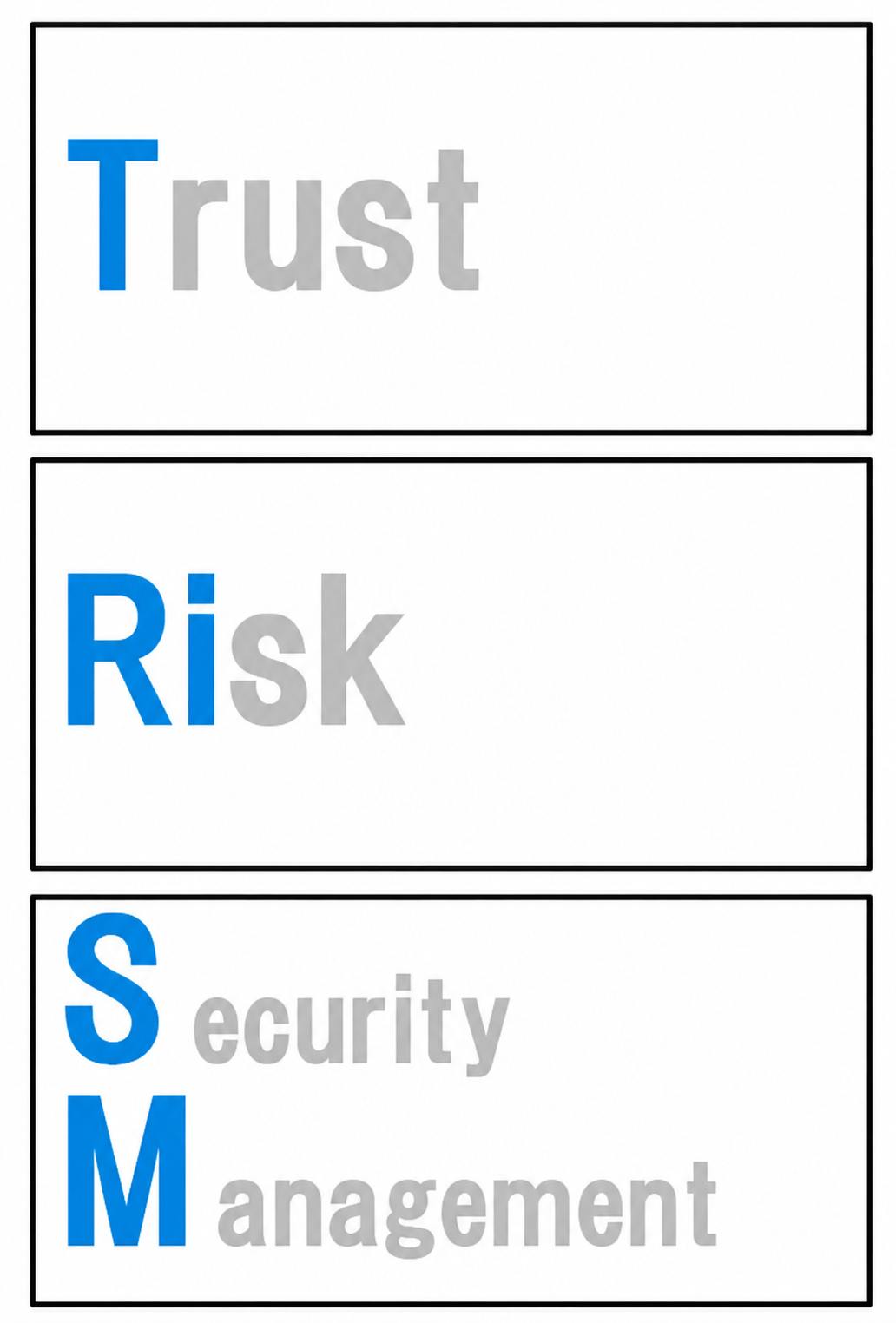
AI TRiSM stands for AI trust, risk, and security management: "a management framework for using AI safely and in a trustworthy way."
To put it plainly...
Before: "AI is amazing! Let's use it everywhere!"
 ↓
Problem: "Wait—this AI is making things up." "It's doing strange things on its own." "Personal data is leaking."
 ↓
Solution: AI TRiSM — "Before using AI, let's build a proper governance structure."
How AI TRiSM Relates to Guardian Agents
Let's first sort out the relationship between AI TRiSM and Guardian Agents.
AI TRiSM is the framework for "what to manage"
AI TRiSM = the framework for "what to manage"
├── Trust ➡ manage trustworthiness
├── Risk ➡ manage risk
└── Security Management ➡ manage security (in an integrated way)
Guardian Agents are the implementation of "how to automate it"
Guardian Agents = the implementation of "how to automate it"
├── Reviewers (automate verification)
├── Monitors (automate monitoring)
└── Protectors (automate control—hitting the emergency brake automatically)
With that understanding in place, here is where we have been and where we are headed, in plain terms:
until now, AI TRiSM has been carried out manually by humans, whereas going forward, it will be automated by Guardian Agents.
With AI handling monitoring and response automatically, organizations can avoid the situation where human operations simply cannot keep up and issues slip through the cracks.
Next, let's consider what this will actually look like for AI adoption in Japan.
Preparing an AI TRiSM Structure Will Definitely Be Necessary
Realistically, in Japan in 2025, forward-leaning companies are just now becoming aware of AI TRiSM and beginning to prepare their organizational structures.
That said—setting aside whether "Guardian Agents" will truly take off under today's exact definition—given the rapid evolution of AI agents and the need to minimize their negative impact, automated AI TRiSM is all but certain to become necessary.
It is not too late to start now. Begin drafting an AI security program with AI TRiSM as its foundation.
Now, let's also touch on Gartner's outlook for the future, which can help guide such planning.
Looking Ahead: Toward 2030
Market Forecast
Gartner predicts that by 2030, Guardian Agent technologies will account for 10–15% of the fast-growing agentic AI market. That represents a market opportunity worth hundreds of billions of yen.
Evolution of the Technology
Short term (2025–2026)
- 15% of day-to-day work will be executed autonomously by AI agents
- One third of enterprise software will ship with agentic capabilities
Mid term (2027–2028)
- 70% of AI applications will adopt multi-agent systems
- Guardian Agents will become a standard requirement for enterprise AI adoption
Long term (2029–2030)
- AI agents will surpass humans as the primary users of many business systems
- Industry-specific Guardian Agent ecosystems will be established
A First Step Toward "Guardian Agents" You Can Take Today
The Gap Between the Ideal and the Reality
We have looked at the future of Guardian Agents, but frankly, as of 2025:
- Full-fledged AI agents: still experimental
- Automated AI TRiSM: concept-first, with only limited implementations
- Guardian Agents: productization is yet to come
In other words, we are in a situation where the vision is compelling, but there is no ready-to-use product yet.
But the Risks Are Already Here
AI risk, however, is not a matter for the future.At this very moment, the following may already be underway:
😱 Risks happening right now
├── Employees entering confidential information into LLM services
├── Inaccurate AI-generated information being delivered to customers
└── Personal data and trade secrets accumulating in external AI services
Any of these could be occurring in your organization today.
Start with What You Can Do Now: LLM Security
Even while we wait for Guardian Agents to become reality, corporate confidential information is exposed to leakage risks through AI systems every single day.
What makes this especially serious is that the information flows in both directions. There is the "outbound risk" of employees entering confidential information into AI, and the "inbound risk" of AI generating and displaying inappropriate information—and both need to be defended against today.
Outbound Defense: Before Your Secrets Leak into AI
A troubling reality is unfolding at many companies at this very moment: sales reps paste customer lists into LLM services and ask for analysis, engineers have AI debug their source code, and HR staff have AI summarize documents containing employees' personal information. Once this information has been sent to an external AI service, it can never be taken back.
LLM-Audit/PII Protector functions as the ultimate defensive wall against this outbound risk. No matter how unconsciously an employee acts, it catches the moment personal or confidential data is about to be sent to an AI and automatically masks or blocks it. From basic personal information such as names, addresses, and phone numbers, to credit card numbers, medical information, and even documents containing keywords like "Internal Only" or "Confidential," a high-precision AI detects and protects them instantly.
Inbound Defense: Protecting Your Organization from Dangerous AI Output
Meanwhile, the information coming back from AI carries major risks of its own. If AI-generated misinformation or inappropriate content is used as-is in customer responses or as input to management decisions, a company's credibility can collapse in an instant. There is no shortage of real cases: an AI chatbot that presented incorrect information caused losses in the tens of millions of yen, and inadvertently published text containing discriminatory language sparked public backlash.
LLM-Audit Inbound-Guard is a comprehensive monitoring system for this inbound risk. It records and analyzes every output the AI generates in real time and instantly detects problematic content. It evaluates output from multiple angles—inappropriate expressions, potential compliance violations, and more—and can raise alerts or automatically correct or block content as needed.
Conclusion: Toward an Era of Trustworthy AI
Guardian Agents are a key technology for drawing out AI's full potential while keeping its risks properly managed. For companies to use AI with confidence and accelerate innovation, this "digital sentinel" will be indispensable.
But while full-fledged Guardian Agent implementations are still on the way, AI risk grows by the day. Now is the time for companies to start with LLM security they can put into practice today.
The video below also covers Guardian Agents—please take a look.
Introducing LLM-Audit
We offer LLM-Audit™, an LLM defense solution that brings together the experience and insights we have gained through developing and operating LLM services.
LLM-Audit is, in a very real sense, a "Guardian Agent you can use today," protecting your company's AI adoption immediately and reliably. It prevents leaks of confidential information on the outbound side and shields your organization from dangerous AI output on the inbound side. With this two-way defense in place, companies can pursue AI innovation with peace of mind.
This enables powerful blocking of malicious input prompts and auditing of inappropriate LLM output, delivering safety and peace of mind for your LLM.
Because it works by simply wrapping your LLM as an OpenAI-API-compatible server, you can achieve advanced LLM security at a very small implementation cost.
If you are interested in LLM security or LLM-Audit™, please contact us. For LLM security consulting or a product demo as well, feel free to reach out via the inquiry form here.